

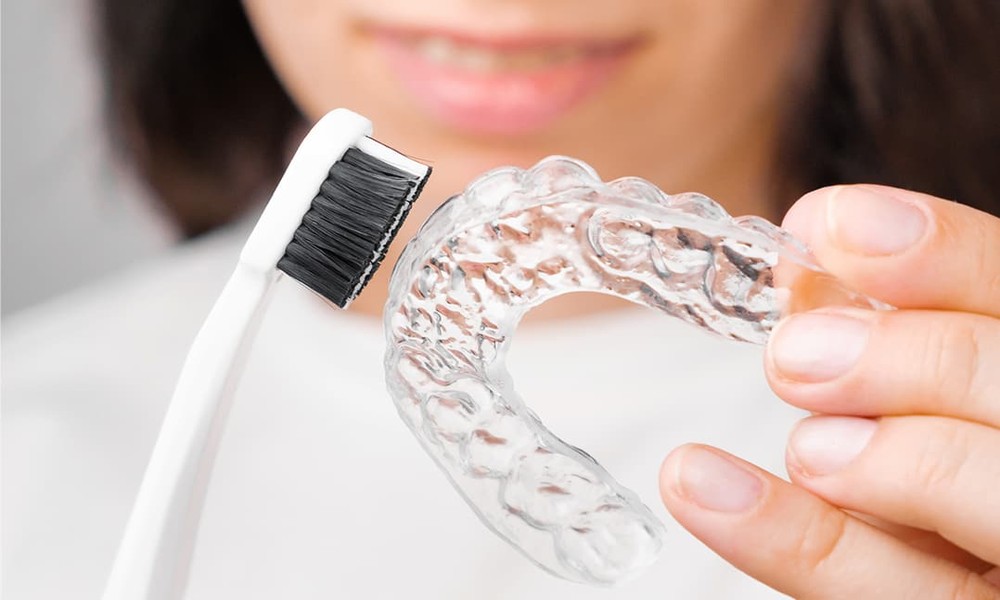
Clear aligners can straighten your teeth without metal brackets or wires. They are almost invisible, but only if you keep them clean. Stains, cloudiness, and bad smells can build up fast. That can affect your treatment and your confidence. If you use clear aligners in Villa Rica, GA, you deserve trays that stay clear and fresh every day. This guide gives you four simple tips that fit into your normal routine. You will learn how to rinse, brush, and store your aligners so they stay clear. You will also see what to avoid, like hot water and sugary drinks. Small daily habits protect your gums and teeth. They also keep your aligners working as planned. With the right care, you can smile, talk, and laugh without worry.
1. Rinse Your Aligners Every Time You Remove Them
Each time you take your aligners out, plaque and food bits start to dry on the surface. That forms a sticky film. It turns cloudy and starts to smell. Fast rinsing stops that.
Follow three steps every time you remove your trays.
- Hold the aligners under cool running water.
- Rub them gently with clean fingers to loosen soft buildup.
- Look for any white or yellow spots before you put them away.
Never use hot water. Heat can change the shape of the plastic. That can loosen the fit and slow your treatment. Warm water feels safe, but it still adds risk. Cool water is enough.
When you are at work or school, keep a simple plan.
- Carry a small, clean case with vents.
- Rinse the trays in a restroom sink.
- Place them in the case if you cannot brush right away.
You can share this habit with your child if they use aligners. Make it part of every snack or meal. Rinse. Store. Repeat.
2. Brush Your Aligners and Your Teeth the Right Way
Clean teeth help keep trays clear. Dirty teeth spread plaque and stains to the plastic. You need to clean both your mouth and your aligners two or three times a day.
The Centers for Disease Control and Prevention urges brushing twice each day with fluoride toothpaste. With aligners, that care becomes even more important. The trays sit over your teeth for many hours. That traps germs close to your enamel.
Use this routine.
- Remove aligners before you eat or drink anything that is not plain water.
- Brush your teeth for two minutes after meals when you can.
- Floss once a day to clear food from tight spaces.
Then clean the aligners.
- Use a soft toothbrush that you keep only for your trays.
- Use cool water and a small amount of clear, unscented liquid soap.
- Brush the inside and outside with light pressure.
- Rinse well so no soap taste stays behind.
Do not use toothpaste on the trays. Most toothpastes contain gritty material. That can scratch the surface. Scratches trap stains and make the trays look dull. Also do not use bleach. That can weaken the plastic and harm your gums.
3. Use Safe Soaks and Clean Storage
Daily brushing helps, but it does not always remove all buildup. A gentle soak can reach spots that your brush misses. It also helps with odor.
Here are common soak choices with simple pros and cons.
|
Cleaning Method |
Main Benefit |
Common Concern |
How Often |
|---|---|---|---|
|
Aligner cleaning crystals or tablets |
Targets plaque on plastic trays |
Higher cost over time |
Once a day |
|
Denture cleaning tablets |
Easy to find in most stores |
Some can fade trays if used too long |
Few times per week |
|
Mild soap and water soak |
Low cost and always on hand |
Less strong on tough buildup |
As needed |
|
Hydrogen peroxide mix |
Helps with odor |
Must be diluted to avoid gum burn |
Once per week |
Before you try a new soak, ask your dentist or orthodontist. The National Institute of Dental and Craniofacial Research explains that strong cleaners can upset your mouth and gums. A short daily soak in a product made for aligners is often enough.
Use this safe soak method.
- Fill a clean cup with cool or room temperature water.
- Add the cleaner as the label directs.
- Place the aligners in the cup so they are fully covered.
- Soak for the time on the label. Do not soak longer.
- Rinse the trays under cool water before you put them back in.
Storage is just as important as soaking.
- Use a hard case every time you take the trays out.
- Pick a case with small vents so moisture can escape.
- Clean the case with soap and water once a day.
Never wrap aligners in a napkin. People often throw them away by mistake. Never leave them loose in a pocket or bag. That spreads germs and raises the chance of cracks.
4. Avoid Common Habits That Stain or Damage Aligners
Some small habits can undo your hard work. They can stain or warp the trays and put your treatment at risk. You can prevent most problems with three simple rules.
Rule 1. Only Water While Aligners Are In
Any drink with color or sugar can stain or feed germs under the trays.
- Remove aligners before coffee, tea, juice, or soda.
- Rinse your mouth with water after you finish the drink.
- Brush if you can before you put the trays back in.
Even clear soda and flavored water can leave sugar behind. That sugar sits trapped under the aligners and attacks enamel.
Rule 2. Say No to Smoking and Vaping With Aligners In
Smoke and vapor can turn clear plastic yellow. They also dry your mouth. That dry feeling lets germs grow faster on teeth and trays.
- Take aligners out before any smoking or vaping.
- Rinse your mouth and your trays with water after.
- Talk with your medical team if you want help to quit.
Rule 3. Keep Aligners Away From Heat
Heat changes the shape of the trays. Even a small change can cause pain or slow tooth movement.
- Do not leave trays in a hot car.
- Do not wash them in hot water.
- Do not place them near a heater or on a sunny window.
If you notice a warped edge or a poor fit, contact your provider. Do not try to bend the plastic back into shape on your own.
When to Call Your Dental Team
Clear aligner care should feel simple. Still, some signs mean you need help.
- Persistent odor even after cleaning.
- White spots on your teeth near the gumline.
- Cracks or sharp edges on the trays.
- Pain that does not ease after a few days with a new set.
Your dentist or orthodontist can check your teeth and the aligners. They can replace damaged trays and adjust your plan if needed.
With steady care, your clear aligners stay clean and almost invisible. You protect your teeth and your gums. You also protect the time and money you put into treatment. Simple daily steps give you a strong, confident smile that you can share without fear.
