

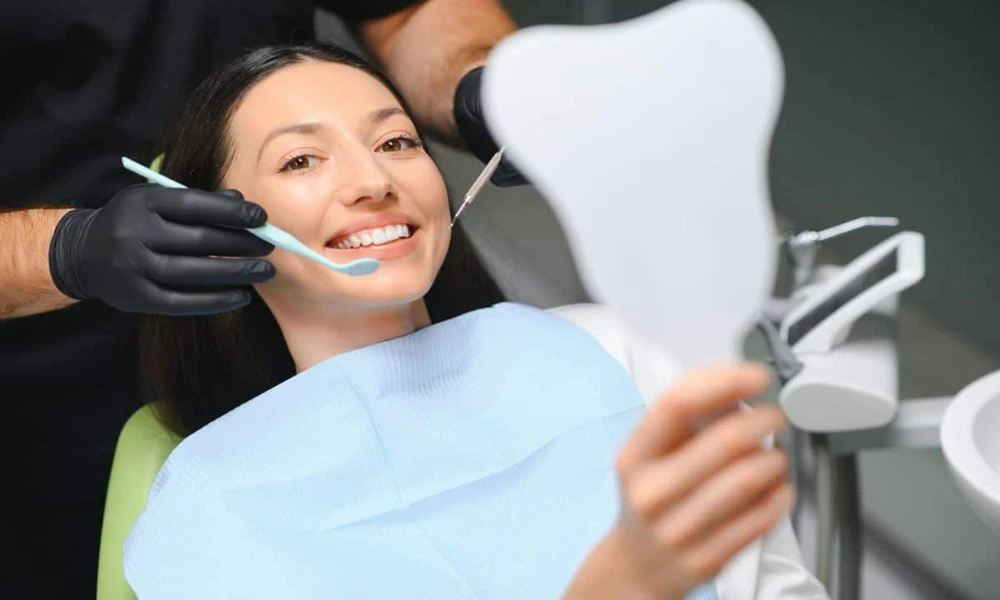
You might be feeling a mix of frustration and hesitation every time you or your child smiles for a photo. Maybe you angle your face a certain way, remind your teen to keep their lips closed, or quickly delete pictures that show chipped or discolored teeth. You know it is “just cosmetic,” yet it still bothers you more than you like to admit, and you may be considering seeing a dentist in Branchburg, NJ.
At the same time, you might worry that wanting a nicer smile is shallow, or that cosmetic dental work is too expensive, too painful, or too much trouble. Because of that tension, you might be stuck in a quiet loop of “I wish my smile looked better” followed by “but I’ll just live with it.”
If that sounds familiar, you are not alone. Many families reach a point where they realize their smiles are affecting confidence, social comfort, even career opportunities. Cosmetic dentistry is not magic, but it can be a practical way to feel more like the person you already are on the inside. In simple terms, if your teeth are healthy enough for routine care, a general and cosmetic dentist can often help you look better and feel calmer when you smile.
This guide walks through three clear signs that cosmetic dental treatment could be right for you or someone you love, what that might involve, and how to think through the decision without pressure.
Sign 1: Your smile is hurting your confidence more than you admit
Maybe it started with one small thing. A dark front tooth after an injury. A gap you have had since childhood. Stains that no whitening toothpaste seems to touch. Over time, that “one small thing” can grow into something you constantly manage in social situations.
You might notice yourself doing things like:
• Smiling with your lips pressed together in photos.
• Covering your mouth when you laugh.
• Avoiding video calls or speaking up at work or school.
• Worrying your child will be teased about their teeth.
On the surface, this can seem minor. Yet it can chip away at how you show up in the world. When you are thinking about how your teeth look, you are not fully present in conversations or experiences. That can feel exhausting.
Cosmetic dentistry options, from professional whitening to bonding to veneers, are designed to address exactly these issues. For example, professional whitening supervised by a dentist can be safer and more effective than store options. You can read more about the science and safety of whitening through the American Dental Association’s overview of tooth whitening.
So where does that leave you? If your smile is holding you back from being yourself, that is a strong sign it is worth at least a conversation with a dentist who offers cosmetic care.
Sign 2: You have functional problems that also affect appearance
Cosmetic dentistry is not only about looks. Many people come in because their bite feels off, a chipped tooth is rough on the tongue, or worn edges make chewing harder. The fact that these issues also change how the teeth look is often the second concern they mention, even though it matters just as much.
Consider a few “what if” examples.
• What if your front teeth are crowded, making them harder to clean, and you keep getting small cavities between them. Straightening them with clear aligners could improve your oral health and the way your smile looks at the same time.
• What if your child has a large chip from a sports accident. A small bonding repair can protect the tooth structure, reduce sensitivity, and restore a natural shape, which also avoids that constant reminder in every photo.
• What if you grind your teeth at night. Over the years, they become shorter and flatter. You might have jaw discomfort, and your smile looks “worn down.” Restorative and cosmetic work together can rebuild function and appearance.
Because of this overlap, a family cosmetic dentistry approach often blends health and aesthetics. A general and cosmetic dentist can look at how things function when you bite, talk, and chew, then recommend treatments that protect your teeth while also improving the way they look.
If you or your child have ongoing sensitivity, broken fillings, or a bite that just does not feel right, and you also do not like how your smile looks, that combination is another sign cosmetic dentistry may fit your needs.
Sign 3: You are ready for a change, but want realistic, safe options
You might have already tried whitening strips, “natural” stain removers, or social media hacks that promise fast results. Some work a little. Some do nothing. A few can even damage enamel if used too often. It is understandable to want an easy fix, especially when time and money are tight.
At some point, though, you might start wondering whether a professional plan would be safer, more predictable, and actually less expensive over time. Cosmetic dentistry is not one single treatment. It is a range of options that can often be tailored to your budget, timeline, and comfort level.
Common treatments include:
• Professional whitening for stains.
• Bonding to fix chips, small gaps, or worn edges.
• Veneers for more dramatic changes in color and shape.
• Orthodontic options to straighten teeth.
• Tooth-colored fillings or crowns to repair decay and blend with your smile.
If you find yourself thinking, “I do not need a Hollywood smile. I just want to feel comfortable in my own,” that is exactly the kind of goal a caring cosmetic dentist can work with.
To better understand what is possible and what is considered cosmetic care, you can review the Ontario Dental Association’s guide to cosmetic dentistry procedures.
How do professional cosmetic options compare to DIY fixes?
When you are trying to decide whether 3 signs cosmetic dentistry could be right for you or your family truly apply to you, it can help to see how professional care compares to doing things on your own at home.
| Issue | Common DIY Approach | Professional Cosmetic Dentistry Approach | What This Means For You |
|---|---|---|---|
| Teeth discoloration | Whitening toothpaste, strips, or social media “hacks” like baking soda | Custom trays or in-office whitening with monitored strength and timing | More predictable results, lower risk of damage to enamel and gums, tailored to your level of staining |
| Chips or worn edges | Smoothing rough spots at home, doing nothing, hiding teeth in photos | Bonding, veneers, or contouring that restores shape and protects the tooth | Improved comfort and appearance, reduced risk of further cracks or wear |
| Crooked or crowded teeth | “Mail-order” aligners without full checkups or X-rays | Orthodontic planning with X-rays, exams, and ongoing supervision | Safer tooth movement, better bite alignment, monitoring of roots and bone health |
| Uneven smile or gaps | Trying to compensate with makeup, photo filters, or camera angles | Bonding, veneers, or orthodontics tailored to your face and bite | A natural-looking result that works with your features instead of hiding them |
Seeing these differences laid out can clarify whether it is time to move beyond temporary fixes. If you recognize yourself in more than one of these rows, that is a strong sign a conversation with a cosmetic dentist could be worthwhile.
Three practical steps you can take right now
1. Get clear on what actually bothers you
Take a quiet moment in front of a mirror or with a recent photo. Try to name, in simple words, what you would change if you could. “My teeth are too dark.” “This chip catches my eye.” “My child is self-conscious about that gap.” Writing it down can help you communicate clearly with a dentist and avoid being talked into anything you do not want.
2. Prioritize health first, then appearance
If you have not had a checkup in a while, schedule a general exam and cleaning before any cosmetic work. Ask the dentist to explain any issues that must be fixed for health reasons, separate from optional cosmetic choices. This order matters. A strong, healthy foundation helps cosmetic work last longer and keeps your mouth comfortable.
3. Ask for a simple, step-by-step cosmetic plan
When you are ready to ask about cosmetic changes, tell the dentist your goals, budget range, and how quickly you hope to see changes. Ask for a written plan with options. For example, “Start with whitening, then consider bonding on two front teeth.” A good cosmetic dentist will respect your limits, explain pros and cons in plain language, and give you time to think before deciding.
Moving toward a smile that feels like you
Wanting a smile you feel proud of is not shallow. It is human. If your teeth are affecting your confidence, your comfort, or your child’s self-esteem, it is reasonable to explore safe, realistic cosmetic options.
You do not have to commit to treatment right away. The first step can be as simple as an honest conversation with a dentist who understands both general and cosmetic care. With clear information, you can decide what works for you, your family, and your budget, without pressure.
You deserve to smile without planning around your teeth. When you are ready, reaching out to a trusted general and cosmetic dentist can be the beginning of that change.
