

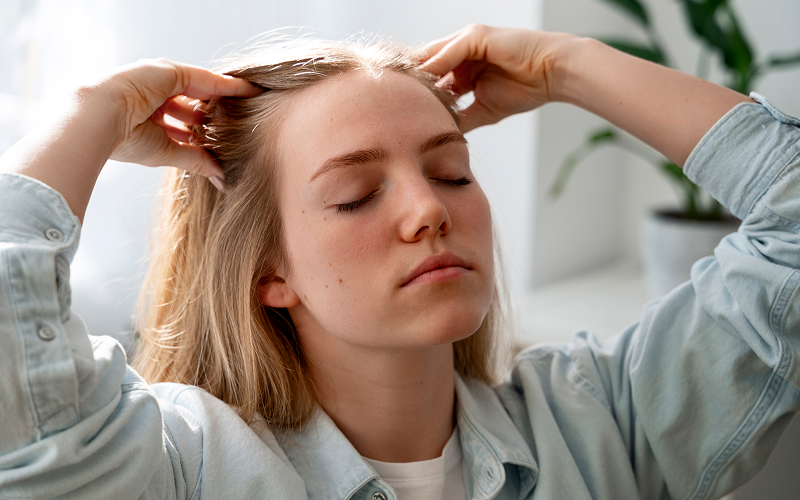
An itchy scalp might be more than just a temporary annoyance, it can indicate the initial symptoms of deeper issues affecting your scalp health.. If not addressed, it could potentially lead to hair thinning or loss. That’s why knowing how to respond early and gently is key. Addressing an itchy scalp begins with identifying the root cause and implementing appropriate measures promptly. This detailed strategy explains how to disrupt the cycle and promote healthy hair growth without exacerbating the situation.
Pause and Assess Before Scratching
The first instinct when you feel the itch is to scratch, but before you do, stop and observe. Does your scalp feel dry, oily, flaky or tender? Is the itching constant or triggered by heat, sweat, or stress? Scratching may offer brief relief but can lead to small abrasions, making matters worse. Start by identifying what your scalp might be reacting to. Sometimes it’s product build-up, other times it could be a skin condition like seborrheic dermatitis or even an allergic response.
Simplify Your Hair Care Routine
Once you’ve taken stock, it’s time to strip your routine back. Reduce the use of items with strong fragrances, sulfates, or alcohol. These ingredients can dry out the scalp or cause further irritation. Opt for a mild, pH-balanced shampoo, preferably containing calming elements such as aloe vera or tea tree. Keep your conditioner away from your scalp unless it’s specifically designed for scalp application. Giving your scalp a breather from harsh products often helps reduce the frequency and intensity of the itch.
Add Moisture the Right Way
A common cause of an itchy scalp is dryness. The solution isn’t to slather on heavy oils and creams but to opt for lightweight, scalp-friendly hydration. Scalp serums, water-based tonics, or lightweight plant oils such as jojoba can aid in restoring balance without blocking pores. Apply directly to the scalp and gently massage it in. This not only provides hydration but also enhances blood flow, aiding in hair growth.
ALSO READ: From Oily to Balanced: Your Ultimate Guide to Scalp Care Done Right
Mind Your Washing Schedule
Over-washing strips your scalp of natural oils, leading to dryness. Under-washing, however, leaves product residue and dead skin, feeding the itch. Finding the right frequency depends on your hair type and lifestyle, but two to three times a week suits most people. This is particularly crucial for individuals who are already facing hair loss. Itchy scalp and hair thinning can go hand-in-hand when inflammation becomes chronic. Maintaining a clean scalp without excessive washing is a delicate balance that truly matters.
Use Targeted Scalp Treatments
Once your basic routine is in place, consider adding targeted treatments to address the root cause. Dandruff, fungal conditions and build-up require specific solutions. Search for components such as salicylic acid, ketoconazole, or zinc pyrithione if you think you have dandruff or slight fungal irritation. Be cautious not to overwhelm your scalp with excessive treatments simultaneously; perform a patch test beforehand and observe your skin’s reaction. This is where consulting a specialist can steer you in the right direction and avoid worsening symptoms.
Address Lifestyle Triggers
Sometimes the scalp is simply reacting to what’s happening internally. Stress, poor diet, dehydration, or lack of sleep can all have an impact. If your itchy scalp occurs alongside more hair loss or visible patches, it may indicate a condition such as telogen effluvium, a type of temporary hair loss. An itchy scalp may be the surface symptom of deeper issues. Adding more greens, omega-3s, and water to your daily intake, along with stress-reducing habits, helps reinforce the health of your scalp from within.
Know When to Seek Help
If the itching continues, worsens, or is accompanied by flaking, redness, or pain, stop trying to handle it yourself. Chronic scalp conditions require proper diagnosis and tailored treatment. Hair loss caused by an itchy scalp isn’t always permanent, but catching it early matters. Trichologists and scalp therapists can pinpoint the root cause and recommend professional treatments to get things back on track.
Treating an itchy scalp isn’t about quick fixes. It takes observation, patience and consistency. From reassessing your routine to making small lifestyle changes, each step helps build a healthier scalp environment. If not addressed, an itchy scalp can occasionally develop into more serious problems such as hair loss. Itchy scalp and hair loss may feel unrelated at first glance, but often, they’re tightly linked through inflammation or imbalance.
Contact Bee Choo Origin to book your itchy scalp treatment and take the first step in addressing hair loss with trusted herbal care.
