

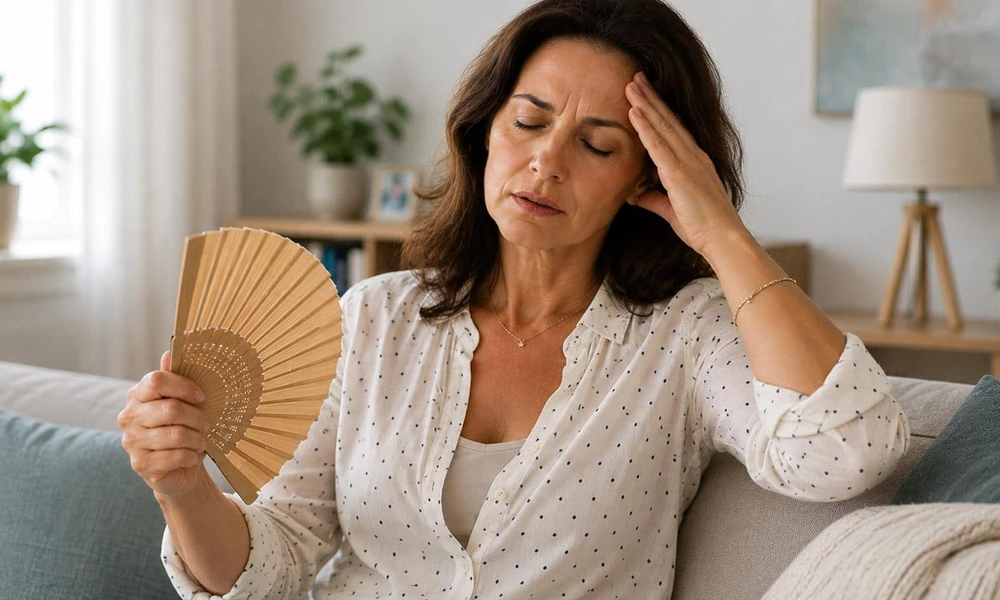
Perimenopause is the hormonal transition leading up to menopause, often starting in your late 30s or 40s. Understanding perimenopause symptoms and treatment options, from irregular periods and mood changes to lifestyle shifts and hormone therapy, can help you feel more like yourself again. Talk to your doctor about what fits your body and health history.
Maybe your periods have started arriving early, or late, or not at all some months. Maybe you feel more irritable than usual, or you’re waking up at 3 a.m. for no clear reason. If you’ve mentioned any of these symptoms to a doctor and been told you’re “too young” for menopause, you’re not imagining things. Learning about perimenopause symptoms and treatment options is often the first step toward feeling understood again and toward finding relief that actually fits your body.
Perimenopause can last for years, and it rarely arrives with a clear announcement. It shows up gradually, in small changes that are easy to dismiss until they start affecting your sleep, your mood, or your daily life. At King’s Pharmacy and Compounding Center in Irvine, we hear from women navigating this transition every week. We listen, we understand, and we work alongside your physician to help you find options that make sense for your body.
What Is Perimenopause?
Perimenopause is the transitional stage before menopause, when the ovaries gradually produce less estrogen and hormone levels begin to fluctuate unpredictably. According to The Menopause Society, this transition can last anywhere from a few years to nearly a decade for some women.
During this stage, your ovaries don’t shut down all at once. Instead, estrogen production becomes erratic: sometimes higher than usual, sometimes lower, rarely steady. That inconsistency is what drives many of the symptoms women notice first, often before they realize hormones are the cause.
Perimenopause is not a diagnosis your doctor makes with a single blood test. It’s a pattern recognized over time, based on your symptoms, your cycle changes, and your age.
Perimenopause vs. Menopause: What’s the Difference
Perimenopause is the lead-up phase, while menopause is a single point marking 12 consecutive months without a period. Confusing the two is common, and it’s part of why women are sometimes told they’re “not there yet” when they’re clearly experiencing real symptoms.
The American College of Obstetricians and Gynecologists (ACOG) notes that perimenopause often begins in a woman’s 40s, though for some it can start in the late 30s and typically continues until menopause itself, which occurs at an average age of 51 in the United States.
Menopause happens when the ovaries stop releasing eggs and estrogen production drops to consistently low levels. Perimenopause is everything that happens on the way there. That distinction matters, because treatment approaches and expectations differ depending on where you are in the process.
Perimenopause is not a diagnosis made with one test. It’s a pattern recognized over time.
Common Perimenopause Symptoms to Watch For
Perimenopause symptoms vary widely from woman to woman, but irregular periods, sleep disruption, and mood changes are among the most frequently reported. Some women notice subtle shifts, while others experience symptoms intense enough to disrupt daily life.
Irregular periods are often the earliest sign. Cycles may shorten, lengthen, or skip altogether, because many cycles during perimenopause become anovulatory, meaning the ovary doesn’t release an egg that month. Without ovulation, progesterone drops, which can lead to heavier, lighter, or less predictable bleeding.
- Hot flashes and night sweats
- Trouble falling or staying asleep
- Mood swings, increased anxiety, or irritability
- Brain fog or forgetfulness
- Vaginal dryness or discomfort
- Fatigue that doesn’t improve with rest
Research summarized by The Menopause Society found that while hot flashes are the symptom most people associate with this transition, many women actually report fatigue, exhaustion, and irritability as their most disruptive experiences. If your symptoms don’t match the stereotype, that doesn’t make them less real.
Not every woman experiences every symptom, and severity can shift from month to month. Some women move through perimenopause with mild, manageable changes. Others find that certain symptoms, like sleep disruption or mood swings, become the hardest part of their day. Both experiences are normal, and both are worth talking through with a doctor who takes them seriously.
Why Your Cycle Feels Unpredictable
Irregular periods during perimenopause happen because ovulation itself becomes inconsistent. When an egg isn’t released, the hormone signals your body normally relies on for a predictable cycle simply don’t show up the same way.
The National Institute on Aging explains that as women age, the number of ovarian follicles naturally declines, which affects both estrogen and progesterone production. This shift can lead to cycles that are shorter, longer, heavier, or lighter than what you’re used to, sometimes all within the same year.
It’s worth mentioning any significant changes in bleeding to your doctor, since irregular bleeding can have several causes and deserves a proper evaluation rather than guesswork.
Many women describe this stage as feeling like their body is running on a different schedule than the one they’ve known for decades. That disconnect, more than any single symptom, is often what makes perimenopause feel so unsettling. Knowing the biology behind it doesn’t make the symptoms disappear, but it can make them feel less random.
Perimenopause Symptoms and Treatment: Lifestyle Approaches That Help
Lifestyle adjustments are often the first line of support for perimenopause symptoms and treatment, particularly for sleep disruption and mood changes. These changes won’t eliminate hormonal fluctuation, but they can make the transition more manageable.
Consistent sleep habits make a real difference. Going to bed and waking at the same time, keeping your bedroom cool, and limiting screens before bed can ease some of the sleep disruption tied to night sweats and anxiety.
Regular movement, a diet with enough protein and fiber, and stress-reduction practices like breathing exercises or short walks also support mood and energy. None of these replace medical care, but they often work well alongside it. For women managing a broader mix of symptoms, a functional medicine approach that looks at the full picture, sleep, stress, nutrition, and hormones together, can be a helpful complement to standard care.
Hormone Therapy and Other Medical Treatment Options
For women whose perimenopause symptoms interfere with daily life, hormone therapy is often the most effective medical option. According to Mayo Clinic, hormone therapy can meaningfully reduce hot flashes, night sweats, and related sleep problems for many women.
Hormone therapy isn’t one-size-fits-all. It can involve estrogen, progesterone, or a combination, and it can be delivered as a pill, patch, or other form depending on your symptoms and health history. Low-dose birth control pills are sometimes used earlier in perimenopause, particularly for women still having periods or dealing with heavy, unpredictable bleeding. Local estrogen treatments may also be an option for vaginal dryness or discomfort.
None of these decisions should be made without your physician, who can review your full health history and help determine what’s appropriate. Some women tolerate certain formulations well and struggle with others, which is often why this process takes a bit of trial and adjustment alongside your doctor.
Hormone therapy isn’t one-size-fits-all, and finding what works often requires adjusting your doctor.
Once you and your doctor land on a plan, a compounding pharmacy can sometimes help fill in gaps that standard, mass-manufactured options don’t address, such as a specific hormone combination, strength, or delivery form your prescriber wants but a chain pharmacy can’t provide. Learn more about the hormones and women’s health services our team supports.
When a Compounding Pharmacy Can Support Your Perimenopause Care
A compounding pharmacy can help when a physician has prescribed a hormone therapy formulation, strength, or delivery method that isn’t commercially available. This is especially relevant for women who need a customized approach based on sensitivities, prior reactions, or specific symptom patterns.
Compounded medications always require a valid prescription from your physician. We don’t diagnose or replace the role of your doctor; we work alongside them. Our pharmacists collaborate directly with prescribers to prepare formulations tailored to what a patient’s care plan calls for.
If your doctor has discussed a compounded option with you, our pharmacists are glad to answer questions about the process, timing, and what to expect.
Conclusion
Perimenopause can feel disorienting, especially when the symptoms show up before you expected them or don’t match what you thought this stage would look like. The most important takeaways: irregular periods, mood changes, and sleep disruption are common signs of this transition, and there are real, evidence-based options, from lifestyle changes to hormone therapy, that can help you feel steadier.
Have questions about whether a compounded medication is right for you? Talk to your prescribing physician, then connect with the pharmacists at King’s Pharmacy and Compounding Center in Irvine, CA, to get started.
Request a Refill or Contact King’s Pharmacy at 949.387.0780.
FAQ
What is perimenopause and how do I know if I’m in it? Perimenopause is the transitional stage before menopause, when hormone levels fluctuate and periods become less predictable. Common signs include irregular cycles, sleep changes, and mood shifts, usually starting in your late 30s to mid-40s. A doctor can help confirm whether your symptoms fit this pattern.
What is the typical perimenopause age range? Perimenopause often begins in a woman’s 40s, though it can start in the late 30s for some. It typically continues until menopause, which happens at an average age of 51 in the United States, according to ACOG.
How is perimenopause different from menopause? Perimenopause is the transition period marked by fluctuating hormones and irregular periods. Menopause is a specific point, defined as 12 consecutive months without a period. Perimenopause comes first and can last several years.
Why are my periods so irregular during perimenopause? Irregular periods happen because ovulation becomes inconsistent during perimenopause. Many cycles are anovulatory, meaning no egg is released, which affects progesterone levels and leads to unpredictable bleeding patterns.
What treatment options exist for perimenopause symptoms? Options range from lifestyle changes, like sleep hygiene, exercise, and stress management, to medical treatments such as hormone therapy or low-dose birth control. The right approach depends on your symptoms and health history, which is why it’s best discussed with your physician.
