

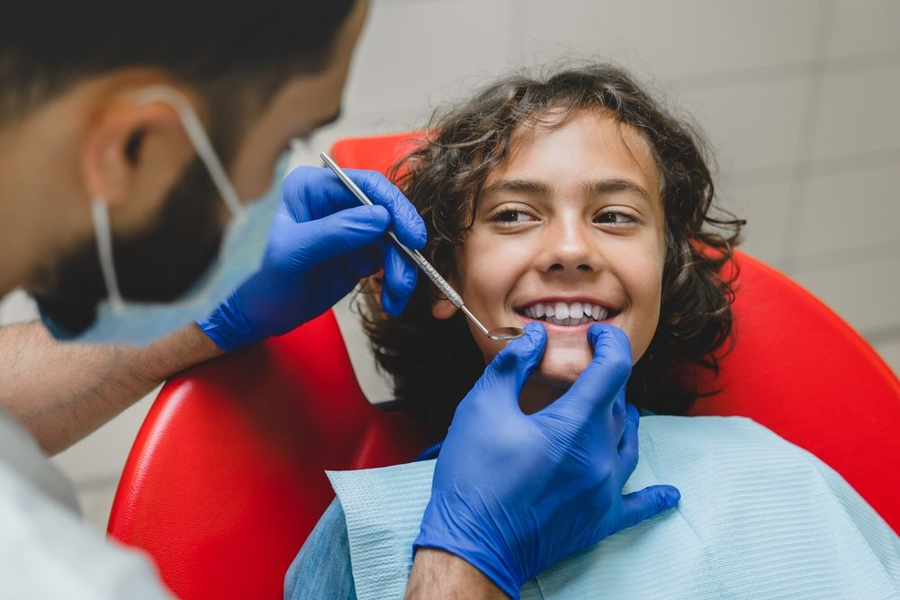
You might be watching your child brush their teeth at night and wondering if you are doing enough. Maybe you see crowded teeth starting to appear, or you worry because your child is scared of the dentist, or you keep hearing that “early orthodontic treatment” is important but you are not sure what that really means. You may be trying to learn about orthodontic care for kids in West Covina so you can make the best decisions for your family. It can feel like a lot, especially when you just want your child to grow up healthy and confident, without turning every appointment into a battle.end
Because of this tension, you might be asking yourself a simple question. Is all this pediatric and orthodontic care really worth the time, money, and stress, and if so, when should you start?
The short answer is yes, it matters, and it matters early. Thoughtful pediatric dental care protects your child’s oral health from the very beginning, while orthodontic care helps teeth and jaws grow in a way that supports a strong bite, clear speech, and a smile your child can feel proud of. Together, they do much more than straighten teeth. They help shape how your child eats, speaks, and feels about themselves for years to come.
Why does early pediatric and orthodontic care feel so overwhelming?
It often starts small. A missed brushing here, a skipped dental visit there. Maybe your child had one bad experience at a dentist in the past, and now even the waiting room is a struggle. Or you notice your child’s front teeth are coming in at odd angles, but you are not sure if it is “just a phase” or something that needs treatment.
This is where the stress builds. You have questions about cost, about timing, about whether your child will be teased at school because of their teeth, and you might not feel you have clear answers. You want professional guidance, but you do not want to be pressured into more treatment than your child truly needs.
So where does that leave you? Usually stuck between worry and hesitation. You do not want to overreact, yet you do not want to ignore something important. That uncertainty alone can be exhausting.
It helps to remember that you are not expected to know everything. A pediatric dentist and orthodontist team is trained to guide you through each stage. Your role is not to have all the answers. Your role is simply to show up, ask questions, and stay open to a plan that fits your child.
What problems are we really trying to prevent or solve?
When you hear about how pediatric and orthodontic care create healthy, confident smiles, it is easy to think only about straight teeth in school photos. The reality goes much deeper. The main issues usually fall into three areas.
- Everyday health problems you can actually prevent
Tooth decay, gum irritation, and pain are common in children, but they are often preventable with early, consistent care. The Centers for Disease Control and Prevention share simple, evidence based oral health tips for children that show how basic routines like brushing with fluoride toothpaste and limiting sugary drinks can make a big difference.
Without this foundation, children are more likely to miss school due to tooth pain, struggle with chewing certain foods, or develop infections that require urgent treatment. That is a heavy burden for something that often starts with a few tiny cavities.
- Emotional stress and self esteem
Children are more aware of their appearance than many adults realize. Crooked, crowded, or protruding teeth can make a child feel self conscious, avoid smiling in photos, or even speak less in class. Over time, that can chip away at confidence.
Thoughtful orthodontic care addresses more than alignment. It supports clear speech, comfortable chewing, and a smile your child feels good about sharing. That combination can quietly support social confidence during some very sensitive years.
- Bite and jaw problems that affect daily life
Misaligned teeth and jaws can cause difficulty biting into food, uneven wear on teeth, mouth breathing, or even jaw discomfort. Early orthodontic evaluations help catch these issues when children are still growing, which often makes treatment simpler and more effective.
Resources such as MedlinePlus on orthodontia explain how braces and other appliances guide teeth and jaws into healthier positions. When this happens at the right time, it can reduce the need for more complex treatment later.
How do pediatric dentists and orthodontists work together for your child?
A strong pediatric dental home offers regular cleanings, cavity prevention, and education tailored to children and parents. The American Academy of Pediatric Dentistry provides clear guidance on what to expect and why early visits matter in their oral health resources.
Orthodontists step in to look at the “big picture” of growth. They focus on how the upper and lower jaws fit together, how teeth line up, and whether there is enough space for permanent teeth to come in. When pediatric dentists and orthodontists coordinate, they can time treatment so it is as gentle and effective as possible.
For example, a child around age 7 might see a pediatric dentist who notices crowding. The dentist refers to an orthodontist, who finds that a simple early treatment could create more room for incoming teeth. That might shorten or simplify braces later, and it can prevent teeth from becoming severely twisted or stuck.
This kind of collaboration is what turns basic dental care into healthy, confident smiles that last. It is not about doing more. It is about doing the right things at the right time.
What should you weigh when deciding on orthodontic and pediatric care?
You may be wondering how to compare early care with a “wait and see” approach. The table below highlights some key differences many families face when deciding how to move forward.
| Approach | Short Term Experience | Long Term Impact | Typical Concerns |
| Early pediatric and orthodontic care | More appointments during childhood, focus on prevention and gentle guidance | Lower risk of severe crowding, fewer emergency visits, higher comfort and confidence | Cost over time, managing a child’s fear or anxiety about visits |
| “Wait and see” with minimal care | Fewer visits at first, less time in offices | Higher chance of complex problems, possible extractions or longer braces later | Unexpected costs, more invasive treatment, impact on self esteem |
| DIY or inconsistent care at home only | Low direct cost, but more uncertainty | Greater risk of cavities, pain, infection, and untreated bite problems | Lack of professional guidance, issues discovered only when they are advanced |
There is no single “right” path for every child. The key is to understand what you are choosing, instead of drifting into a pattern that only becomes clear when problems are harder to fix.
What can you do right now to protect your child’s smile?
- Start or strengthen a simple home routine
Focus on what you can control today. Make sure your child brushes twice a day with fluoride toothpaste and uses a soft brush sized for their age. Help or supervise brushing until at least age 7 or 8. Limit sugary drinks and sticky snacks, especially between meals. These small daily habits are the foundation that both pediatric dentists and orthodontists rely on when building treatment plans.
- Schedule a pediatric dental visit and ask direct questions
If your child has not seen a dentist in the past 6 to 12 months, that is the next step. Choose a pediatric dentist if possible, since they are trained specifically in child behavior and growth. At the visit, share your concerns openly. Ask about cavity risk, jaw growth, and whether an orthodontic evaluation is recommended. You are not committing to treatment just by asking. You are gathering information to make calmer choices.
- Plan an early orthodontic check, even if everything “looks fine”
Many orthodontic organizations suggest an initial check around age 7. This does not always mean braces at that age. It simply gives an expert a chance to see how your child’s teeth and jaws are developing. If treatment is needed, you can talk through timing, cost, and options in advance, instead of feeling rushed later when problems are more obvious.
Moving forward with clarity and confidence
Caring for your child’s smile is not about perfection. It is about giving them comfort, health, and the quiet confidence that comes from feeling good when they laugh or speak. Thoughtful pediatric care and orthodontic treatment work together to support that goal, from the first baby tooth to the last phase of braces or aligners.
You do not have to solve everything at once. Start with one step. Build a steady routine at home, schedule a visit, ask the questions that are on your mind. Over time, these small choices add up to strong teeth, a healthy bite, and a smile your child can carry with pride into every stage of life.
